Ground improvement in Chandler, Arizona, encompasses a suite of geotechnical techniques designed to enhance the engineering properties of soil and mitigate risks associated with weak or problematic subsurface conditions. In a region where urban expansion pushes development into areas underlain by collapsible soils, expansive clays, and alluvial deposits with varying density, these methods are not merely optional—they are essential for ensuring the long-term performance and safety of structures. From residential subdivisions to large-scale commercial and infrastructure projects, the ability to modify soil behavior through densification, reinforcement, drainage, or chemical stabilization directly influences foundation design, pavement longevity, and overall construction costs. This category covers specialized services including deep soil mixing (DSM) design, stone column design, and dynamic compaction design, each tailored to address specific subsurface challenges encountered in the Sonoran Desert environment.
The geological setting of Chandler is dominated by the Basin and Range Province, characterized by deep alluvial basins filled with sediments eroded from surrounding mountains. Near-surface soils often consist of interbedded sands, silts, and clays deposited by ancestral floodplains of the Salt and Gila River systems. Two geohazards are particularly prevalent: collapsible soils, which undergo sudden volume reduction upon wetting, and expansive clays that swell and shrink with moisture fluctuations. These behaviors can lead to differential settlement, slab cracking, and infrastructure distress. Additionally, loose granular layers may be susceptible to liquefaction during seismic events, a concern underscored by Arizona's moderate seismicity. Understanding these local conditions is critical, and solutions like unsaturated soil analysis provide the necessary framework to predict and mitigate moisture-sensitive soil behavior.
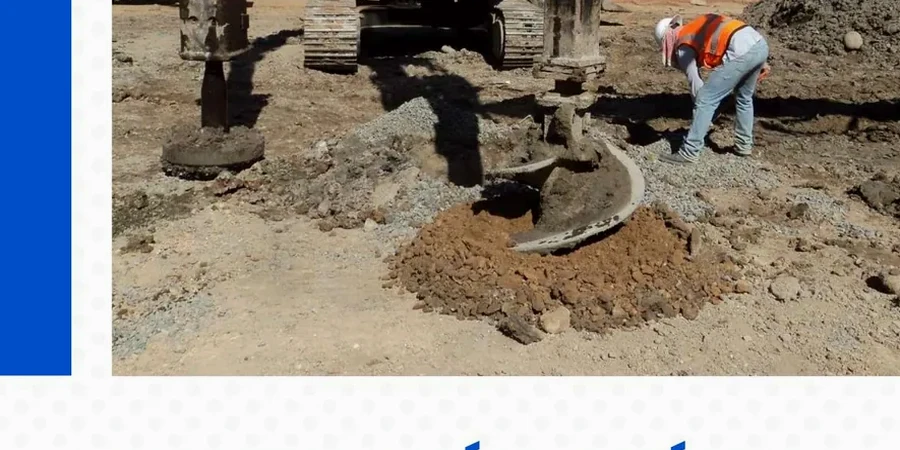
Regulatory compliance in Chandler is governed by the City of Chandler Building Code, which adopts the International Building Code (IBC) with local amendments, alongside standards from the American Society of Civil Engineers (ASCE) and the Arizona Registrar of Contractors. Geotechnical investigations must follow guidelines established by the Arizona Geological Survey and ASTM International, particularly for ground improvement techniques requiring verification testing. For instance, designs involving deep mixing or grouting must demonstrate performance through post-treatment strength testing and settlement monitoring, adhering to acceptance criteria outlined in project-specific geotechnical reports. The Maricopa County Environmental Services Department also regulates certain injection methods to protect groundwater quality, making it imperative to integrate regulatory considerations early in the design phase.
The types of projects requiring ground improvement in Chandler are diverse. Industrial warehouses and distribution centers, prevalent along the Loop 202 corridor, frequently employ prefabricated vertical drain (PVD) design to accelerate consolidation of soft clays under preload embankments. Municipal infrastructure such as roadways and water treatment plants benefit from grouting design to fill voids and stabilize loose soils. Commercial developments with heavy structural loads often rely on rigid inclusions or stone columns to control total and differential settlement. Even residential projects in areas with documented expansive soils may require chemical stabilization or post-tensioned slabs informed by advanced soil suction analyses. Each technique is selected based on a rigorous evaluation of soil stratigraphy, groundwater conditions, structural loading, and performance criteria.
Available services
Unsaturated soil analysis
→ Ver detalleStone column design
→ Ver detalleDynamic compaction design
→ Ver detalleDeep Soil Mixing (DSM) design
→ Ver detalleGeotechnical drainage design
→ Ver detallePrefabricated vertical drain (PVD) design
→ Ver detalleGrouting design
→ Ver detalleJet grouting design
→ Ver detallePreloading design (without surcharge)
→ Ver detallePreloading with surcharge design
→ Ver detalleVibrocompaction design
→ Ver detalleGeogrid specification
→ Ver detalleGeomembrane specification
→ Ver detalleLime and cement stabilization
→ Ver detalleLandfill geotechnics
→ Ver detalleGeotechnical instrumentation (design and installation)
→ Ver detalleOrganic soil management
→ Ver detalleContaminated soil remediation
→ Ver detalleQuestions and answers
What is the primary purpose of ground improvement in geotechnical engineering?
The primary purpose is to alter the physical or mechanical properties of soil and rock to enhance bearing capacity, reduce settlement, mitigate liquefaction potential, or control groundwater flow. This is achieved through densification, reinforcement, drainage, or chemical stabilization, ensuring that the ground can safely support structural loads and perform acceptably over the design life of a project.
How do I know if my Chandler project requires ground improvement?
A geotechnical investigation is the definitive way to determine necessity. Indicators include the presence of collapsible or expansive soils, loose sands, soft clays, high groundwater, or proximity to active washes. If the report predicts excessive total or differential settlement, inadequate bearing capacity, or liquefaction risk that cannot be economically addressed by deep foundations alone, ground improvement is typically recommended.
What are the typical design parameters evaluated for ground improvement techniques?
Design parameters evaluated include in-situ soil strength, compressibility, permeability, gradation, moisture content, and chemical compatibility. For dynamic methods, energy requirements and influence depth are key. For drainage or grouting, flow rates and set times matter. Site-specific factors like vibration sensitivity, access constraints, and environmental regulations also heavily influence the selection and design of the appropriate technique.
How is the performance of a ground improvement system verified after installation?
Verification relies on a combination of pre- and post-treatment in-situ testing, such as cone penetration tests (CPT), standard penetration tests (SPT), pressuremeter tests, and geophysical surveys. Load tests on footings or columns may be conducted. Settlement monitoring using survey points and piezometers is also common. The specific verification program must be outlined in the project specifications and approved by the geotechnical engineer of record.