Slope engineering in Chandler, Arizona, encompasses the analysis, design, and stabilization of natural and man-made inclines to prevent failures that could threaten property, infrastructure, and public safety. This category covers a full spectrum of geotechnical services addressing the unique challenges posed by the region's arid climate, desert soils, and monsoon-driven erosion patterns. Homeowners, developers, and municipal agencies rely on these specialized evaluations to comply with local building codes and mitigate risks associated with slope instability. From initial site assessments to advanced stabilization designs, slope services ensure that Chandler's hillside developments and drainage corridors remain safe and functional over the long term.
Chandler sits within the Basin and Range physiographic province, where the underlying geology consists largely of Quaternary alluvial deposits, weakly cemented sands, silts, and gravels, often interbedded with caliche layers. These materials exhibit low cohesion when dry and can lose significant strength when saturated during intense summer monsoon rains. The presence of expansive clays in some areas further complicates slope behavior, as cyclic wetting and drying leads to desiccation cracks and progressive weakening. Local topography ranges from nearly flat valley floors to gently sloping terraces and man-made embankments, but even modest inclines can become unstable when surface drainage is uncontrolled or when cut-and-fill operations alter natural equilibrium.
Geotechnical practice in Chandler is governed by the City of Chandler Building Code, which adopts the International Building Code with local amendments, alongside Arizona-specific standards for earthwork and foundation design. A critical requirement is the evaluation of static and seismic slope stability, particularly for projects within designated geologic hazard zones or those involving cuts exceeding four feet in height. Engineers must perform rigorous factor of safety (FS) calculation to demonstrate minimum acceptable margins against sliding and rotational failure, typically targeting values of 1.5 for static conditions and 1.1 for seismic loading per IBC guidelines. The City also mandates drainage studies and erosion control plans for any development on slopes greater than ten percent, referencing Maricopa County's Drainage Design Manual for stormwater management criteria.
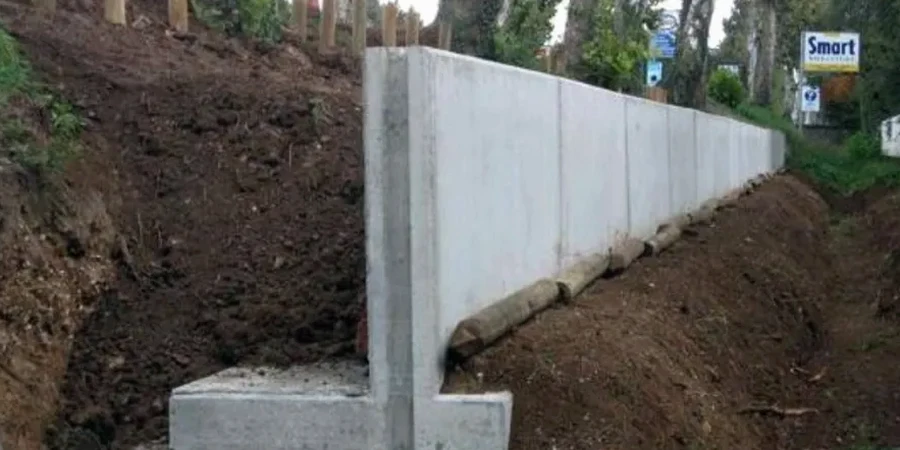
A wide variety of projects in Chandler require professional slope services, including residential subdivisions on hillside lots, commercial developments with retaining structures, roadway expansions through cut sections, and stormwater detention basins. When existing slopes show signs of distress such as cracking, slumping, or excessive erosion, a slope failure analysis is essential to diagnose the failure mechanism and guide remedial measures. For new construction, engineers integrate retaining wall design with overall site grading to optimize land use while maintaining stability. In areas prone to concentrated runoff during monsoon storms, debris flow analysis helps predict sediment transport and design protective barriers, ensuring that downstream properties are safeguarded against rapid, destructive flows.
Available services
Soil erosion analysis
→ Ver detalleSlope stability analysis
→ Ver detalleSlope failure analysis
→ Ver detalleDebris flow analysis
→ Ver detalleFactor of safety (FS) calculation
→ Ver detalleGeocell design
→ Ver detalleActive/passive anchor design
→ Ver detalleRetaining wall design
→ Ver detalleMSE (Mechanically Stabilized Earth) wall design
→ Ver detalleDiaphragm wall design
→ Ver detalleSheet pile wall design
→ Ver detalleLandslide assessment
→ Ver detalleGeotechnical slope monitoring (monthly)
→ Ver detalleQuestions and answers
What are the most common causes of slope instability in Chandler, Arizona?
The primary triggers include intense monsoon rainfall that saturates weakly cemented soils, reducing their shear strength, along with improper drainage that concentrates runoff. Over-steepening during cut-and-fill operations, expansive clay behavior during wet-dry cycles, and erosion at the toe of slopes also contribute significantly to instability in this region.
When is a slope stability analysis required for a development project in Chandler?
The City of Chandler typically requires a stability analysis for any proposed cut or fill exceeding four feet in height, for slopes steeper than 2H:1V, or when development occurs within mapped geologic hazard zones. Projects near drainage channels or in areas with documented historical slope movements also trigger this requirement under local building code provisions.
What factors influence the cost of slope stabilization in Chandler?
Costs vary widely depending on slope height, soil conditions, access constraints, and the chosen stabilization method. Simple regrading and revegetation are generally the least expensive options, while retaining walls, soil nailing, or anchored systems involve higher engineering and construction investment. A site-specific geotechnical investigation is essential to develop accurate cost estimates.
How long does a typical slope remediation project take from investigation to completion?
Timelines depend on project complexity and permitting requirements. A basic investigation and report may take three to four weeks, while design and City review can add four to eight weeks. Construction duration varies from a few days for minor drainage improvements to several months for major retaining structures or large-scale earthwork and anchoring installations.